
Skip to main content 👋 Hello there!
Free Estimate

Rain Garden Installation

Rain gardens improve water quality, foster native habitat, increase aesthetic value, and contribute to building a healthier ecosystem. The sum of small projects results in meaningful positive change. 

What is a Rain Garden?

Rain gardens are designed to capture and filter runoff during storms as the water that they hold slowly percolates back into the ground. They are purposely designed to fill with water during a rain event and can remain flooded for as long as 48 hours after a storm. Typically, rain gardens pond to a height of 18 inches but they can be more shallow or deeper depending on the specific project. When rain gardens are designed and installed effectively, they reduce the amount of sediment and hazardous runoff that enters our water ways in the Chesapeake watershed. For us, at Green Thumb, projects like this are deeply fulfilling since they use natural systems improve our environment.

A good rain garden installation begins with a good design in a proper location. It is important to size the garden appropriately so that it can hold the amount of water it will receive during an average rainfall. Other factors such as the soil absorption rate and locations of foundations must be considered before selecting a site for the rain garden.

Growing conditions at the site and the demands of each microclimate inside the rain garden determine the appropriate palette of plants to plant. Some areas of the garden will be very demanding of plants, requiring that they can survive multiple days in standing water, and also potentially survive weeks with out any water.
Getting Your Hands Dirty

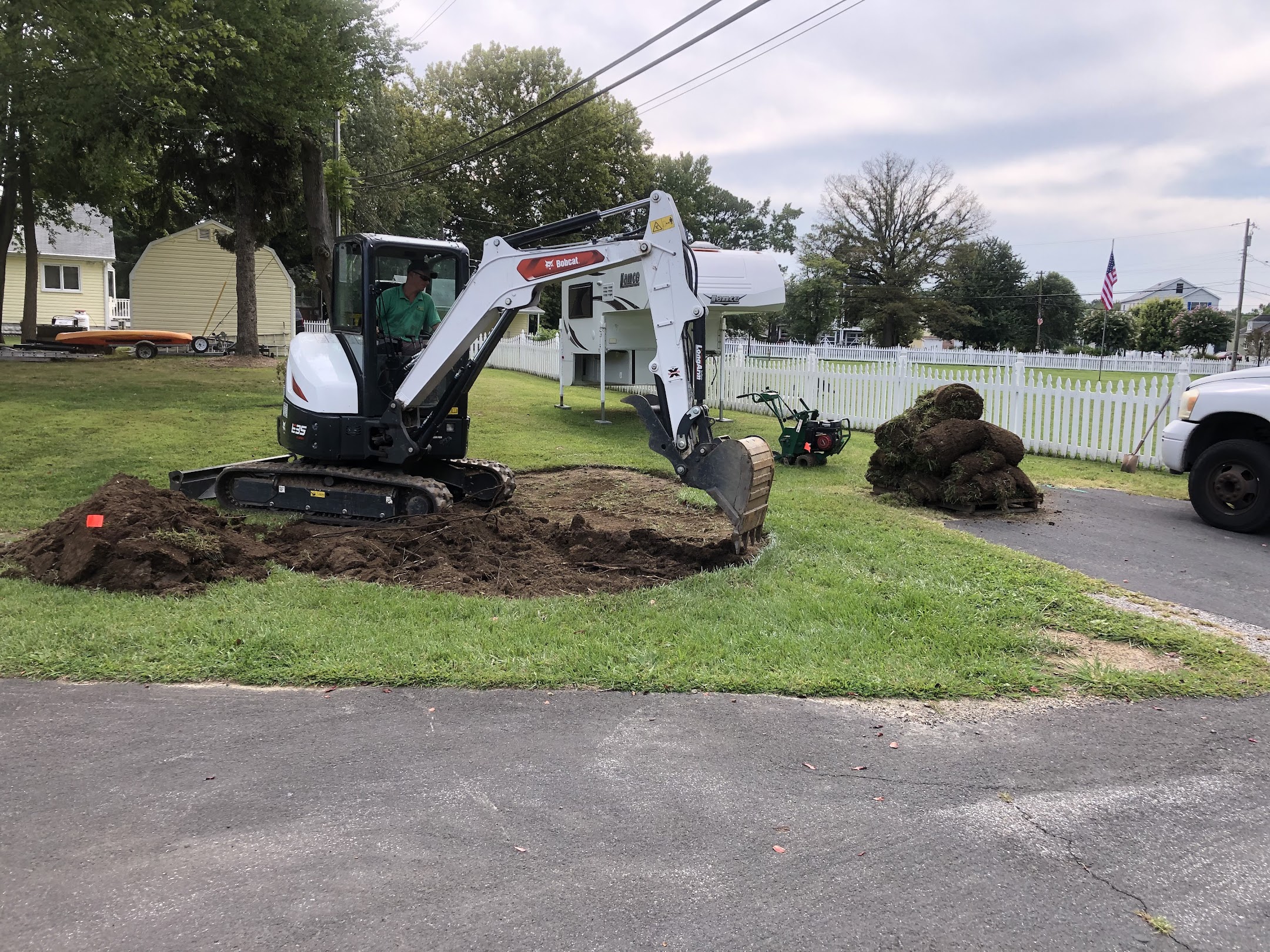
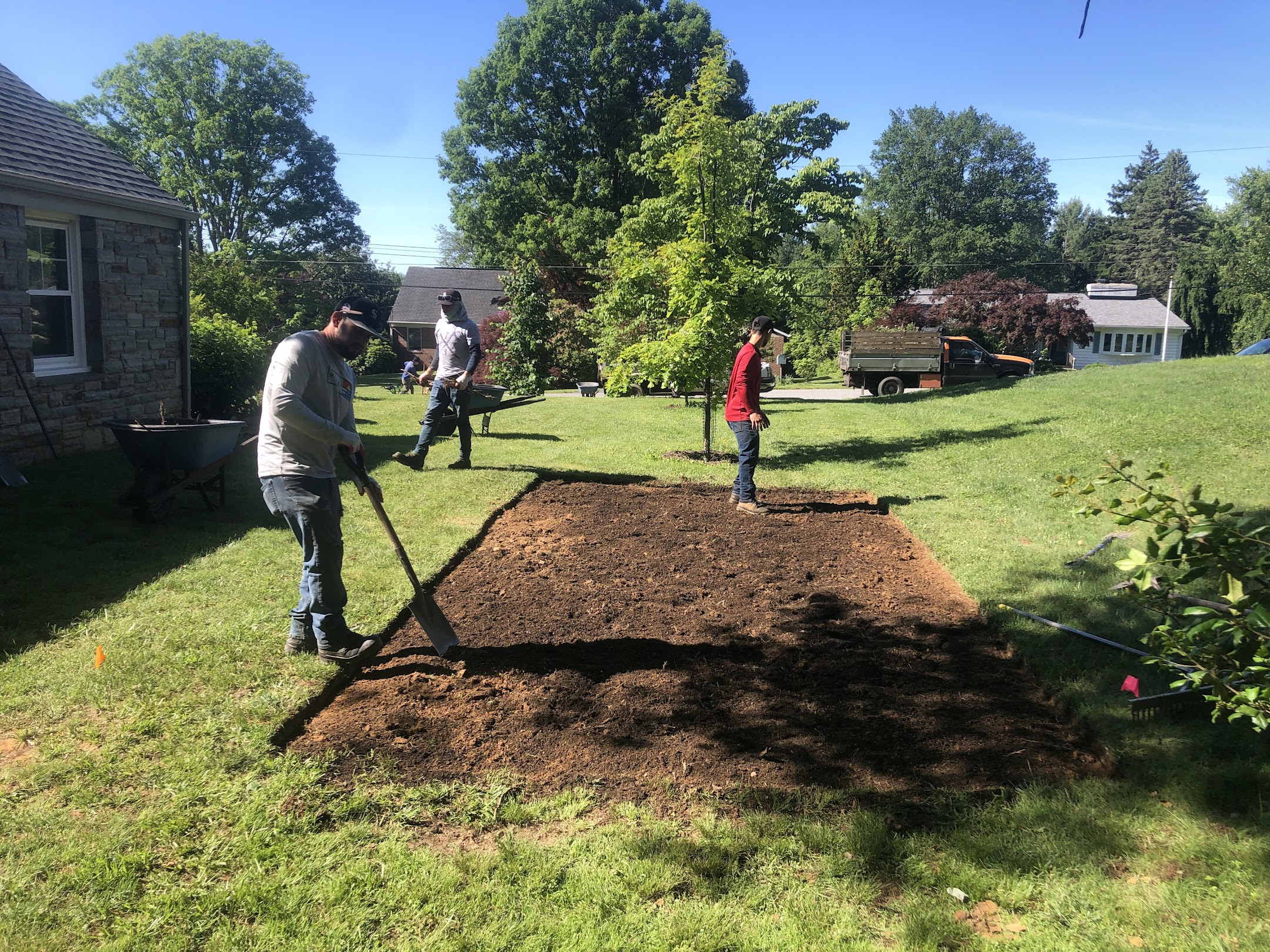
The installation begins after the location and plans for the rain garden are established. Earth works are completed first. A basin is excavated to create the bowl or pond for the rain garden. Then, berms are constructed around the perimeter of the basin using the excavated soil.  Depending on the site and the rain garden design, inlets and outlets are installed into the berm to flood the pond.  The difference in height between the outlet and the bottom of the basin determines the maximum ponding depth of the garden. Any necessary soil amendments are made at this time.

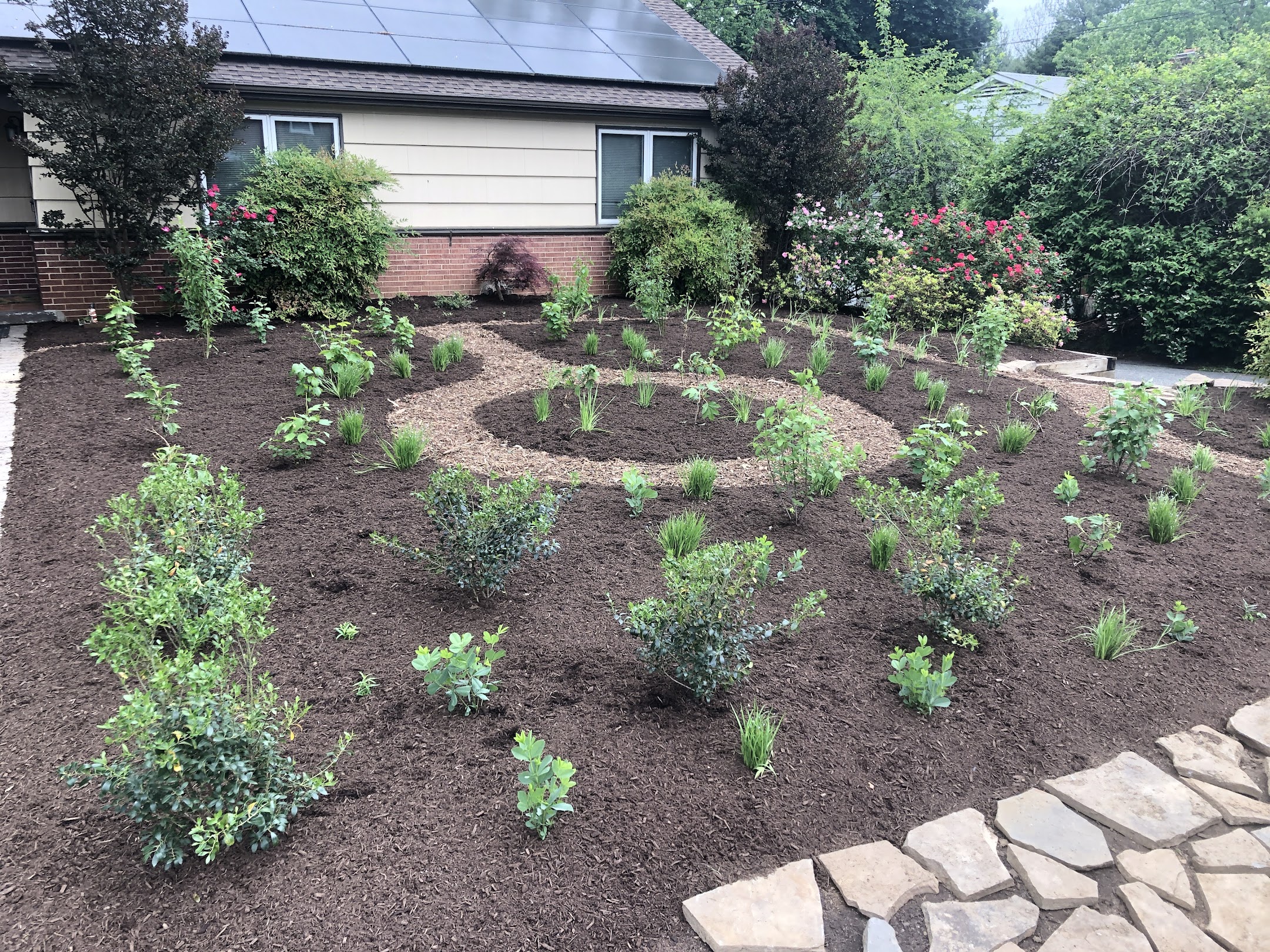
After the rain garden earth works are completed, planting begins. Plants are located based on their biological needs. Some of the plants can tolerate the damp basin, while other plants are better suited for the dry berms. We utilize native plants in our designs to maximize ecological benefits. Typically, rain gardens are densely planted with juvenile plants to optimize the budget and minimize the time to maturity. Once everything is planted, the rain garden is top dressed with a thick layer of mulch.

Proper Maintenance = Positive Results

We design rain gardens to be low maintenance; very different from NO maintenance.

Features of the rain garden such as the inlet and outlet will always require maintenance. It is important to visually inspect these areas and keep them free of debris so that the garden can flood and drain as intended.

Expect the rain garden to require more attention through the establishment phase. It will require regular weeding and watering for as many as two years before the maintenance becomes noticeably easier. Watering twice per week is critical to the survival of a new rain garden in its establishment phase. We highly encourage the use of automatic timers and sprinklers to ensure that watering is done regularly and consistently. Monthly weeding is non-negotiable for during the establishment phase. Weeds will choke out and suppress the juvenile plants if they are not removed consistently.

The good news is that two years after the installation, a rain garden typically reaches maturity. In the third growing season, the plants begin to cover most if not all of the garden and weeds do not have access to the resources they need in order to establish. Some weeding will be required, but only on an as needed basis. Furthermore, the density of plants helps to retain moisture in the soil and regular watering is no longer unless we are in a period of severe drought.